
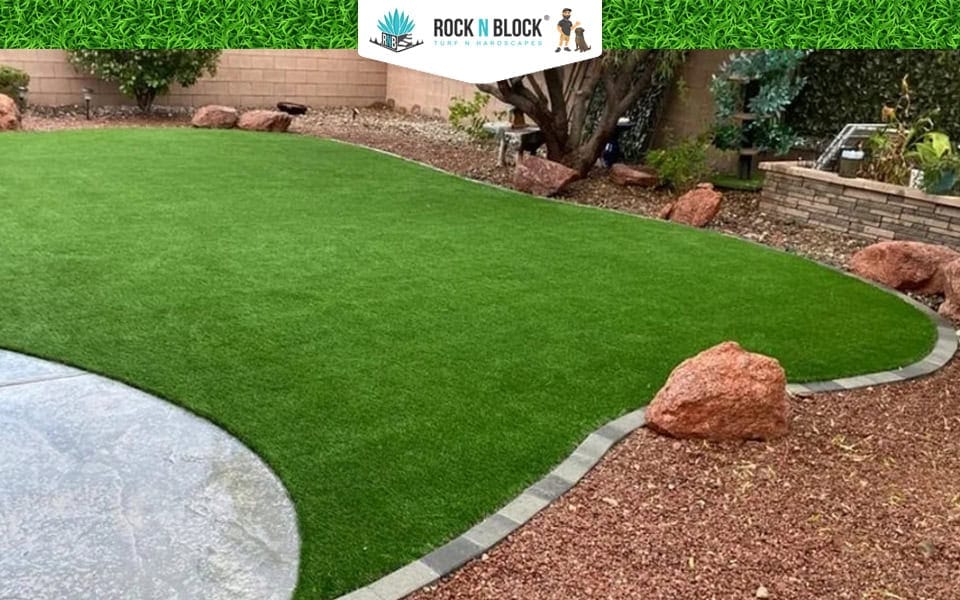
Desert homeowners ask us this more than almost any other question, and for good reason. A lawn in Las Vegas, Phoenix, or Mesquite takes more sun and heat in one summer than turf in milder climates sees in several. Rock N Block Turf N Hardscapes has installed more than 3 million square feet of artificial turf over 20 years, much of it in the Mojave and Sonoran deserts, so we’ve seen what keeps turf looking good in the heat and what wears it out early.
How Long Does Artificial Turf Last in the Desert?
High-quality artificial turf typically lasts 15 to 25 years with proper care. In the hottest desert conditions, such as a Las Vegas or Phoenix summer, a quality product can still perform well for about 15 years. Product quality, installation, foot traffic, pets, and routine care determine where your lawn lands in that range. The rest of this guide covers what affects turf lifespan in Arizona and Nevada, and what you can do to stay toward the top of that range.
What Affects Artificial Turf Lifespan in Hot Climates?
Heat and sun matter, but they’re only part of the picture. The biggest factors are ones you control when you choose a product and an installer.
| Factor | Effect on Lifespan | What Helps |
|---|---|---|
| Product quality | Products not built for desert conditions can fade and harden within a few years | Turf rated for UV exposure and high heat |
| Base and grading | Poor grading causes drainage problems and uneven wear | A compacted, properly graded base |
| Seams | Poorly joined seams separate and show over time | Professional seaming |
| Foot traffic and pets | Heavy use and dog runs can shorten lifespan | Higher face weight and a drainage backing |
| Routine care | Debris and matting wear fibers faster | Regular rinsing, clearing, and brushing |
| Reflected window heat | Concentrated reflections can melt turf fibers | Window film, screens, or shade |
What Shortens Turf Life in Arizona and Nevada?
UV Exposure
Desert sun is the main reason cheap turf fails early. Products that weren’t selected for desert conditions can fade, harden, and lose their realistic look within a few years under the Nevada sun. Turf designed to handle intense UV exposure and high temperatures holds its color and texture far longer.
Reflected Heat From Windows
This is the most common heat problem we see, and it has nothing to do with air temperature. Energy-efficient Low-E windows are coated to reflect heat away from the home. That reflected sunlight can land on nearby turf, and the concentrated heat can reach the 175°F to 200°F range where most synthetic turf starts to melt. Phoenix-area and Las Vegas homes with south- or west-facing windows are the most exposed.
The fix is simple once you know the cause:
- Window film: Exterior anti-reflective film on the source window breaks up the concentrated reflection.
- Screens or awnings: Solar screens or an awning over the window block the reflection before it reaches the yard.
- Shade trees: A tree planted between the window and the lawn intercepts the hot spot.
- Design around it: Placing pavers, rock, or planting beds in the reflection zone keeps turf out of the path.
Reflective heat damage is excluded from most turf warranties, including ours, so it’s worth checking your windows before installation.
Heavy Foot Traffic and Pets
Turf in a dog run or a busy play area works harder than turf in a front yard that’s mostly looked at. Heavy use in dog runs can shorten turf lifespan somewhat, which is why we recommend pet-specific products with drainage backing for those areas. Our guide to artificial grass for dogs and pets covers what to look for.
Poor Installation
Turf that wasn’t properly graded develops drainage problems. Seams that weren’t professionally joined become visible from across the yard. Both issues speed up wear and can’t be fixed by a better product alone.
How Product Choice Affects Lifespan
Face weight (the weight of the blades), backing, and drainage all shape how turf handles desert heat and daily use. Here’s how Rock N Block’s lineup compares:
| Product | Total Weight | Face Weight | Pile Height | Backing | Warranty |
|---|---|---|---|---|---|
| Rockn-80 | 70 oz | 50 oz | 1 to 1.5 in. | Hydroflow | 25 years |
| Natural-100 | 108 oz | 88 oz | 1 to 1.5 in. | Hydroflow | 25 years |
| Modern-103 | 103 oz | 78 oz | 1.77 in. | Optimum Flow | 25 years |
| Rockn Putt-85 | 85 oz | 60 oz | 0.59 in. | Optimum Flow | 25 years |
Every product uses V- and Z-shaped blades with added folds for resiliency, so the fibers spring back after foot traffic. The Hydroflow and Optimum Flow backings move rain and pet urine through the turf quickly, which keeps the base stable and the surface clean. Higher face weights suit high-traffic yards. During your consultation, we match the product to how you’ll use each area.
How Installation Affects Lifespan
A turf lawn is only as durable as what’s underneath it. Our artificial turf installation process starts with site preparation and base construction using high-quality sand, then precise fitting and securing of the turf. That foundation keeps the surface level, keeps water draining, and prevents the stretching and rippling that shorten turf life.
How to Make Artificial Turf Last Longer in the Heat
Desert turf needs very little care, but the care it does need makes a real difference:
- Clear debris regularly: Use a leaf blower or rake to remove leaves and twigs before organic matter builds up.
- Rinse with a hose: A regular rinse clears dust, dirt, and pet odors.
- Brush monthly: A stiff broom or turf brush keeps blades upright and prevents matting, especially in high-traffic areas.
- Clean up after pets promptly: Pick up waste and rinse the area to prevent odors and stains.
- Protect the surface: Keep sharp objects off the turf and avoid parking heavy furniture in one spot for long periods.
- Fix small problems early: Address loose seams or small holes as soon as you notice them.
- Check for window reflections: Watch for melted streaks near windows in spring and summer, when sun angles shift.
Our artificial grass maintenance guide covers each step in more detail.
Signs Your Artificial Turf Needs Replacing
Even well-kept turf eventually wears out. Watch for:
- Fading: Color that has noticeably lightened across the lawn, beyond minor variation.
- Hardened fibers: Blades that feel stiff or brittle instead of soft.
- Permanent matting: Flattened areas that no longer stand up after brushing.
- Drainage problems: Water pooling on the surface after rinsing or rain.
If you’re seeing these signs, a site visit can tell you whether repairs or a replacement makes more sense.
Why Desert Homeowners Choose Rock N Block for Artificial Turf
- Warranty coverage in writing: Rock N Block’s lifetime turf warranty is defined as a 25-year limited material warranty plus a 3-year labor warranty from installation. See the full terms on our warranty page.
- Desert experience: Rock N Block started in Las Vegas and has installed more than 3 million square feet of turf over 20 years.
- Recognition: Angi Super Service Award (2024) and BBB accreditation.
- Reviews: A 4.8-star average across 651 customer reviews. Read them on our testimonials page.
- Licensed in Nevada and Arizona: NV LIC #0089346 and #0091447, and AZ LIC #359837, plus licenses in California and Utah.
We install turf across the desert Southwest, including Las Vegas, Mesquite, Phoenix, and St. George, along with our other service areas in California, Colorado, and Florida.
Get Turf Built for the Desert With Rock N Block
Artificial turf can last 15 to 25 years in Arizona and Nevada when the product, installation, and care are right, with the hottest and busiest yards toward the lower end of that range. Choosing turf built for UV and heat, installing it on a proper base, and protecting it from reflected window heat are the three decisions that matter most. Rock N Block Turf N Hardscapes handles all three and backs the result with a 25-year material warranty.
Ready to plan a lawn that holds up to desert summers? Contact Rock N Block for a free consultation and estimate.
Frequently Asked Questions
1. Does Rock N Block’s warranty cover fading?
The warranty covers manufacturing defects. Minor color variation and normal wear over time are expected and are not considered defects, so gradual, even fading from years of sun is treated as normal wear.
2. Is turf damage from window reflections covered by warranty?
No. Damage from reflective heat or melting is excluded from Rock N Block’s warranty. Adding window film, screens, or shade before installation is the best protection.
3. Does my turf warranty transfer if I sell my home?
No. Rock N Block warranties are non-transferable and cover only the original purchaser.
4. Can artificial turf qualify for the SNWA rebate in Las Vegas?
It can, as part of a larger conversion. The Southern Nevada Water Authority allows permeable artificial turf in its Water Smart Landscapes program when the project also meets its living plant cover and drip irrigation rules. You must get SNWA approval before removing any grass.
5. Does artificial turf last longer in Southern Utah than in Las Vegas?
St. George summers are also hot, and Southern Utah adds winter freeze-thaw cycles. Quality turf still typically lasts 15 to 25 years there with proper care. Our Southern Utah cost comparison covers the local numbers.