
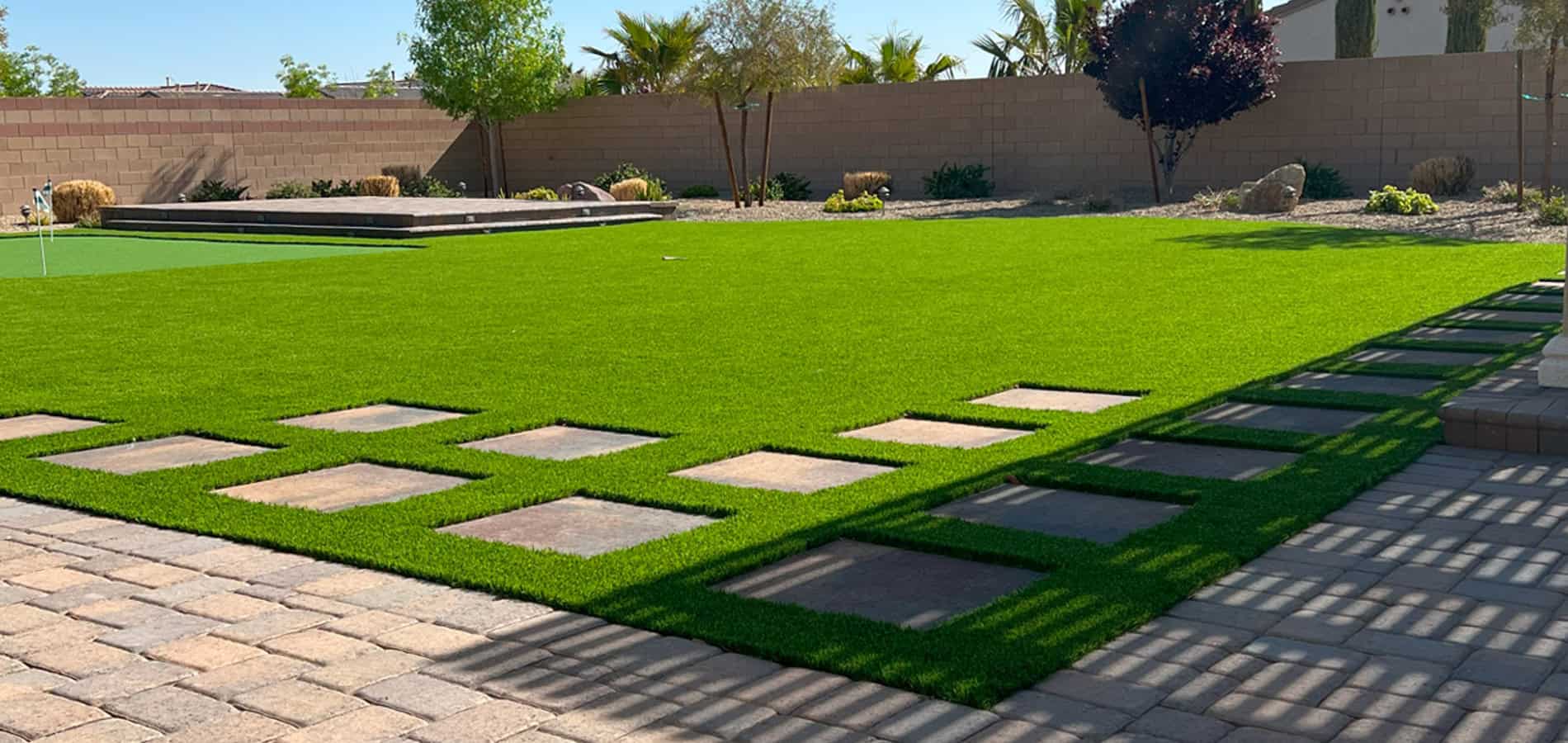
One of the first questions Rock N Block hears from homeowners considering artificial turf is whether they’ll ever have to deal with weeds again. The honest answer is that a properly installed and maintained artificial lawn should see very few weeds, but “very few” isn’t the same as “none,” and understanding why weeds occasionally show up is the first step to keeping them out for good. Rock N Block installs artificial turf and hardscapes for homeowners across Arizona, California, Colorado, Florida, Nevada, and Utah, and every installation is backed by a 25-year limited material warranty and a 3-year limited labor warranty.
Weeds in artificial turf happen when airborne seeds land in the infill, dust, or organic debris that naturally collects on top of a synthetic lawn over time, not because the lawn itself contains soil. With the right installation and a little routine upkeep, they’re one of the easiest turf problems to prevent.
Why Do Weeds Grow Through Artificial Turf in the First Place?
It seems counterintuitive: there’s no soil on top of a properly installed artificial lawn, so where would a weed even take root? The answer is usually one of two places. First, wind and birds carry weed seeds everywhere, including onto turf, and those seeds can germinate in the thin layer of dust, pollen, grass clippings, and other organic debris that settles into the infill and along the edges over months and years. That buildup functions like a very shallow layer of soil, which is enough for an opportunistic weed to sprout in.
Second, weeds can occasionally push up from underneath if the base wasn’t compacted properly during installation, if a seam or perimeter edge has lifted or separated over time, or if drainage holes in the turf backing sit directly above a gap where soil and moisture have accumulated. This second cause points to installation quality rather than routine upkeep, which is why who installs your turf matters as much as how you maintain it afterward.
How Proper Installation Prevents Most Weed Problems Before They Start
Most weed problems that trace back to the base rather than surface debris are preventable with the right groundwork. A well-prepared installation starts with removing existing vegetation and roots, compacting a proper base material to create a stable, even surface, and, depending on the site’s soil conditions, adding a weed barrier layer before the turf goes down. Seams and perimeter edges also need to be secured tightly enough that they don’t lift or separate as the ground settles.
Rock N Block builds its installations around meticulous site preparation and proper base construction on every project, which is the foundation that keeps a lawn weed-resistant for years rather than months. If you’re evaluating turf installers, it’s worth asking directly what base materials they use and whether a weed barrier is recommended for your specific yard, since soil conditions vary enough from property to property that the right answer isn’t always the same.
Routine Maintenance Habits That Keep Weeds From Coming Back
Even a perfectly installed lawn needs a small amount of upkeep to stay weed-free, since the organic debris that creates a growing medium for weed seeds accumulates from everyday life, not from installation quality. A few habits go a long way:
- Brush the turf periodically: Brushing lifts the blades back upright and helps knock loose debris out of the infill before it has time to build up.
- Rinse or blow off leaves, grass clippings, and dust: The sooner organic material is removed, the less chance it has to compost into a growing medium.
- Keep the perimeter trimmed and edged: Overgrown garden beds or lawn edges right next to the turf line make it easier for seeds to blow or fall directly onto the surface.
- Check seams and edges during routine cleaning: Catching a lifted seam early is a much smaller fix than dealing with an established weed problem months later.
- Top up infill if it’s visibly thinning: Low infill levels expose more of the backing and can make it easier for airborne seeds to find a foothold.
What to Do If Weeds Already Appear
If a weed does show up, hand-pulling is almost always the safest first move, since the shallow root systems that grow in surface debris come out easily and this avoids the risk of harsh chemicals damaging the turf backing or fibers. For recurring spots, a turf-safe weed preventer is generally a better choice than a broad general-purpose herbicide, since not all weed control products are formulated to be safe for synthetic turf backing and infill.
If weeds keep coming back in the same spot, that’s usually a sign of an underlying issue, like a lifted seam, a low spot where debris collects, or a section of infill that’s worn thin, rather than a one-off. That’s worth a call to your installer rather than repeated spot-treatment, since it’s a smaller fix early than after months of recurring growth in the same place.
Which Are the Top Rated Artificial Turf Companies for Homeowners?
A few things separate a turf installation that stays weed-free and looking sharp for its full warranty period from one that needs early attention:
- Installation process, not just product: Even premium turf will develop problems over a poorly prepared base. Ask what base materials and compaction methods a company uses.
- Warranty terms in writing: A “lifetime” warranty claim should come with a clear, written definition of what that actually covers and for how long.
- Product quality and drainage design: Turf backing that manages water and debris well reduces the organic buildup that leads to both weeds and odor problems.
- Reputation and reviews: Look for a consistent track record across many completed projects, not just a handful of curated testimonials.
- Service area and support after installation: A company that’s still there to answer maintenance questions years later is worth more than one offering the lowest bid.
Rock N Block installs artificial turf for homeowners across Arizona, California, Colorado, Florida, Nevada, and Utah, backed by a 25-year limited material warranty and a 3-year limited labor warranty on every project. Every installation starts with the same meticulous site preparation and proper base construction, the exact groundwork that prevents most weed problems before they ever start, paired with turf products built with drainage-focused backing designed to move rain and pet waste through rather than letting it sit and break down into the kind of debris that invites weeds.
Get a Free Artificial Turf Consultation
Weeds around artificial turf almost always trace back to one of two things: organic debris accumulating on the surface over time, or a base or seam that wasn’t properly installed to begin with. A little routine brushing and debris removal handles the first, and choosing an experienced installer handles the second. Rock N Block has been helping homeowners across Arizona, California, Colorado, Florida, Nevada, and Utah get a low-maintenance, weed-resistant lawn for years. Book a free consultation or call (888) 894-2486 to get started.
FAQs
1. Will weeds ruin my artificial turf?
No. Weeds that grow in surface debris have shallow root systems and typically pull out by hand without damaging the turf. The bigger risk to the turf itself comes from an underlying installation issue, like a lifted seam, which is worth addressing regardless of whether weeds are present.
2. Can I use regular weed killer on artificial turf?
Not all weed control products are safe for synthetic turf backing and infill. Look for a product specifically labeled safe for artificial turf, or ask your installer for a recommendation, rather than assuming a standard lawn herbicide is fine to use.
3. How often should I brush my artificial turf to prevent weeds?
This depends on foot traffic, nearby trees, and local conditions, but periodic brushing combined with clearing leaves and debris after they fall is the general habit that keeps infill from accumulating the organic buildup weeds need to take root.
4. Do all artificial turf installations need a weed barrier?
Not necessarily. Whether a weed barrier layer makes sense depends on the specific site’s existing soil and vegetation conditions. This is a question worth asking your installer directly rather than assuming one standard approach applies to every yard.
5. How do I know if recurring weeds are a sign of an installation problem?
A weed that shows up once in an open area of the lawn is usually just surface debris. Weeds that keep returning in the exact same spot, especially near a seam or the perimeter edge, are more likely pointing to a base or seam issue underneath, which is worth having your installer look at.